Deutsch
  English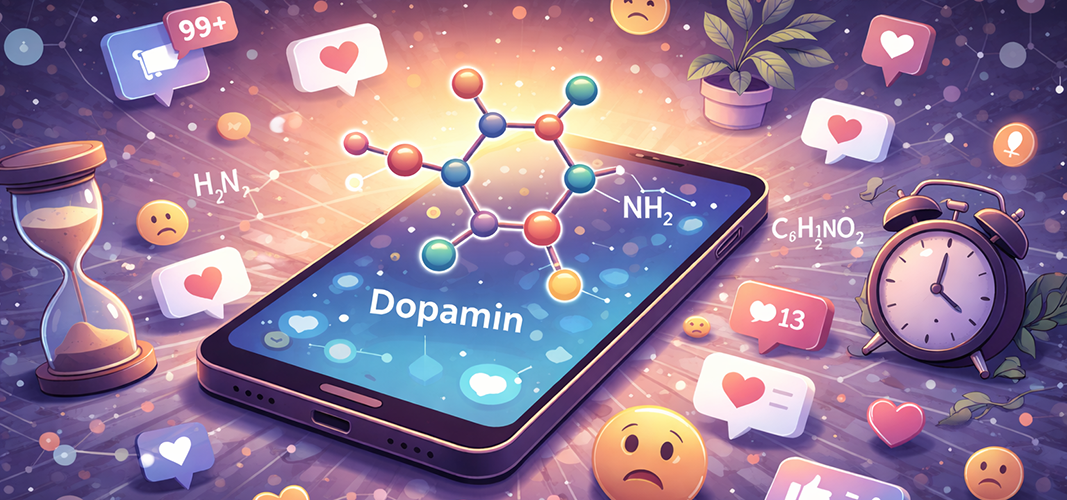
- Details
- Written by: Manuel Häusler
Around ten years ago, I made the bolt decision to step back completely and separating myself from the services of the Meta corporation – namely Facebook, Instagram, WhatsApp and the like. At the time, I had no idea what changes this decision would bring me personally. It took me a while, but as of today I would say that this step has been very beneficial for me and my mental health. I fell once again more pleasure in my own small achievements, appreciate the little things in everyday life, and overall feel more balanced.
However, this decision also has its downsides. Keeping in touch with many of my friends has become more difficult, because they are used to communicating solely via these platforms. As a result, it is often not easy for me to remain integrated in or to avoid being unintentionally forgotten.
Nevertheless, I am convinced that, overall, it was the right decision for me. In this post, I would like to compile some facts and studies that show the price we pay for the apparent “connectedness”, and why it is worth questioning these systems critically.
Standardisation through distorted competition
Social media does not simply show us a neutral selection of content. The feed is generated by algorithms that are, among other things, designed to highlight posts that generate particularly high levels of engagement. What attracts many people automatically becomes even more visible. This creates a self-reinforcing cycle: popular content continues to be pushed, while other content remains invisible. In system dynamics, such self-reinforcing processes are referred to as positive feedback loop. The result is increasing uniformity. Diversity fades into the background. Instead, trends and hypes dominate, picked up by ever more users. The picture presented to us therefore appears distorted and does not reflect the full breadth of content and possibilities.
Filter bubbles and self-reinforcing content
It feels good to see content that confirms our own opinions. Over time, the algorithm learns which content we like and shows us more and more of it. The goal is to keep us consuming content and encourage us to interact. Gradually, our personal feed turns into what is known as a filter bubble. We see almost exclusively things that align with our worldview and reinforce our opinions. What happens outside this bubble hardly reaches us. The diversity of perspectives is lost. Instead, we move within a bubble that confirms our viewpoint and marginalises other voices. Independent opinion-forming and diverse reporting are no longer possible under such conditions – yet both are indispensable in a democracy.
Sticky UI design
The vast majority of social media services are financed through advertising. This means: the longer we spend on them, the more advertising we consume and the more money the platform earns. For this reason, the apps and their graphical user interfaces (UI) are deliberately designed to make us return as frequently as possible and to make it difficult for us to disengage.
Endless scrolling (doom-scrolling), notifications, or the urge to check how many likes and comments one’s own post has received – these are mechanisms deliberately implemented to keep us glued to the screen. What appear to be harmless features actually make use of psychological techniques that foster dependency and draw us back into the app time and again. Among many people, particularly young people, addictive behavioural patterns in relation to these apps can be observed.
Self-criticism through constant comparison
Those who share content on social media often present only the sunny side of life. We enjoy sharing beautiful moments and achievements with our friends. The platforms help us polish posts to a high gloss quickly and easily using filters, templates or AI tools. The temporary spot next to my nose is not something I necessarily want to share with the whole world.
When consuming such content, we are flooded with these idealised images. We unconsciously compare them with our own everyday lives. Even though we know that much of it is staged and exaggerated, a feeling of dissatisfaction can arise. We begin to measure ourselves against unattainable ideals. This can intensify stress and self-doubt – often without us even noticing it directly.
Over the past few years, I have read and heard many reports about the negative effects of social media. I have listed some of them below. I do not believe that everything is driven by deliberate malice on the part of corporations or individuals. Rather, it is an interplay: on the one hand, there is an economic system that primarily measures success in terms of profit and growth. On the other hand, there is our human need to express ourselves and share beautiful moments. Combined with the possibilities of modern algorithms and data analysis, this creates a system that is toxic.
For me, there are only two ways to escape this cycle: to give up social media altogether, or to rely on decentralised, federated alternatives. There, no central authority can control our communication or (mis)use it for its own purposes.
Decentralised, federated services
In contrast to centralised platforms, there are also services that are not operated centrally by a single company. They are based on decentralised, federated structures: different providers offer infrastructure and apps to use the service. This means you are free to choose which provider you obtain the service from. If you are dissatisfied, you can change provider without having to give up the service itself.
Well-known examples are in fact part of everyday life: email, SMS or the internet itself function in exactly this way. There are also such services in the social media sphere. The largest network of this kind is Mastodon, which belongs to the so-called Fediverse. In a certain sense, Bluesky can also be counted among them, although it is not (yet) fully federated.
Interesting references (in German)
- Social-Media-Sucht (SRF, 17.02.2026)
- Probleme bei Social Media sind immanent (heise, 18.08.2025)
- Jugendliche, Bildschirme und psychische Gesundheit (WHO, 25.09.2024)
- Die Kehrseite föderierter Messaging-Dienste (Threema, 09.04.2024)
- Mythos Filterblase – Sind wir wirklich so isoliert? (bpb, 01.03.2024)
- Wie Social Media die psychische Gesundheit von Jugendlichen beeinflusst (ZHAW, 02.02.2024)
- So machen Apps süchtig (c't 22/2019)